




1. The Macro-Digital Landscape of Thailand: A Nation in Transition
The digital ecosystem of Thailand in 2025 has matured into one of the most dynamic, saturated, and mobile-centric markets in Southeast Asia. This maturation represents a fundamental shift from an era of user acquisition to one of intense attention economics. With internet penetration reaching 94.7% of the population, equating to approximately 67.8 million users according to https://www.nationthailand.com/news/general/40058632 , the digital realm is no longer a subset of the Thai economy; it is the economy. The ubiquity of access, primarily driven by a mobile-first infrastructure where over 90% of web access occurs via smartphones , has created a fertile ground for the rapid deployment and adoption of artificial intelligence (AI) technologies. This saturation necessitates a nuanced understanding of the behavioral, economic, and technological undercurrents shaping the market.

1.1 The “Small-Joy” Economy and Consumer Resilience
The economic backdrop of 2025 is characterized by a dichotomy between macroeconomic headwinds and resilient digital consumption. While the broader advertising industry in Thailand faced contraction in early 2025 according to https://minimicegroup.co.th/2025-thailand-seo-market-report/, digital advertising and organic search investments outperformed expectations. This divergence is attributed to the “small-joy” purchasing behavior—a psychological response to economic pressure where consumers, constrained in their ability to purchase large-ticket items like real estate or vehicles, maintain high-frequency transaction volumes for affordable luxuries, beauty products, and mood-boosting goods.
This behavioral shift has profound implications for search marketing. The search intent has migrated from high-consideration, long-cycle research to rapid, impulse-driven discovery and validation. Consumers are not merely “searching” for products; they are seeking immediate gratification and validation through digital channels. Consequently, the role of search marketing has evolved from simply capturing demand to generating demand through algorithmic serendipity and high-precision targeting. The resilience of the e-commerce sector, projected to exceed 1 trillion baht in 2025 , underscores the criticality of search visibility in capturing this fragmented but high-volume spending power.
1.2 The Demographic Divide and Digital Integration
Thailand’s digital society is not monolithic. It is characterized by a sophisticated, multi-generational user base that has integrated AI into daily life with surprising speed. Reports indicate that 48.3% of Thais feel excited about using AI, with anxiety regarding job displacement remaining notably lower than in Western markets. This cultural openness is reflected in the adoption of generative AI tools, with ChatGPT commanding a dominant market share of 84.3% among Thai AI users, significantly outpacing competitors like Google Gemini based upon https://www.nationthailand.com/news/general/40058632
This rapid adoption suggests a fundamental change in information retrieval behavior. Thai users, particularly Gen Z and Millennials, are increasingly bypassing traditional search engine interfaces in favor of conversational agents and AI-driven summaries. This shift is not merely a preference for a different interface; it represents a demand for synthesized, actionable answers rather than a list of blue links. The “search” experience is becoming conversational, multimodal, and deeply integrated into the social fabric of platforms like LINE and TikTok, creating a fragmented landscape where “search marketing” must now operate across multiple, distinct algorithmic ecosystems.
1.3 Infrastructure as an Enabler
The deployment of advanced AI in search marketing is underpinned by robust digital infrastructure. Thailand’s 5G rollout covers approximately 90% of the population according to https://datareportal.com/reports/digital-2025-thailand, and median mobile internet speeds have surged to 61.21 Mbps. This bandwidth capability is crucial for the “Zero-Click” and visual search trends dominating 2025. It allows for the instantaneous loading of high-definition video content, complex AI-generated overlays, and real-time agentic interactions without latency. Furthermore, strategic investments, such as the $1 billion commitment to cloud infrastructure and data centers in Chonburi , have provided the computational power necessary to host low-latency AI applications locally. This infrastructure ensures that the advanced AI features deployed by platforms like Shopee, Lazada, and Google can function seamlessly on the mobile devices that serve as the primary gateway to the internet for the vast majority of Thais.
2. The Google Paradigm Shift: AI Overviews and the Zero-Click Reality
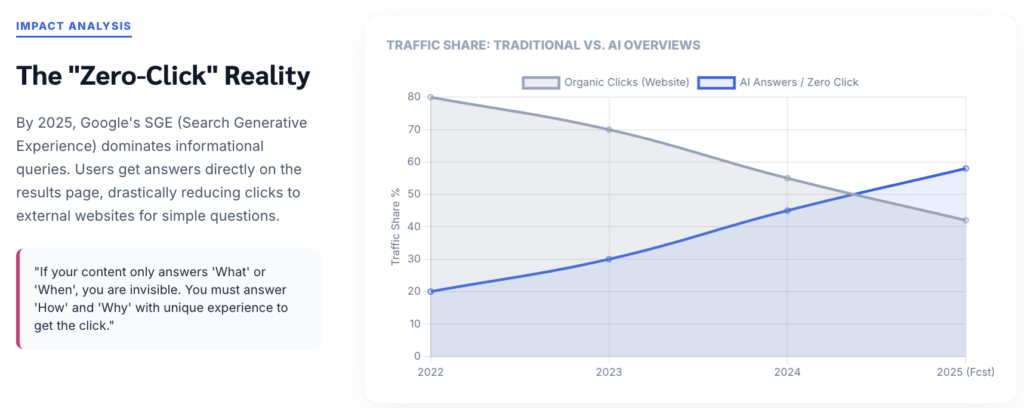
The introduction and full deployment of Google’s AI Overviews (formerly Search Generative Experience or SGE) in Thailand marks the most significant disruption to the search engine results page (SERP) in the history of Thai SEO. As of 2025, AI Overviews are available to all users in Thailand, supporting the Thai language and utilizing advanced machine learning to synthesize information from multiple sources according to https://support.google.com/websearch/answer/14901683?hl=en and https://blog.google/products/search/ai-overview-expansion-may-2025-update/This technological leap has fundamentally restructured the value exchange between Google, users, and content publishers, precipitating a crisis in organic traffic known as the “Great Decoupling.”
2.1 The Mechanics of AI Overviews in the Thai Context
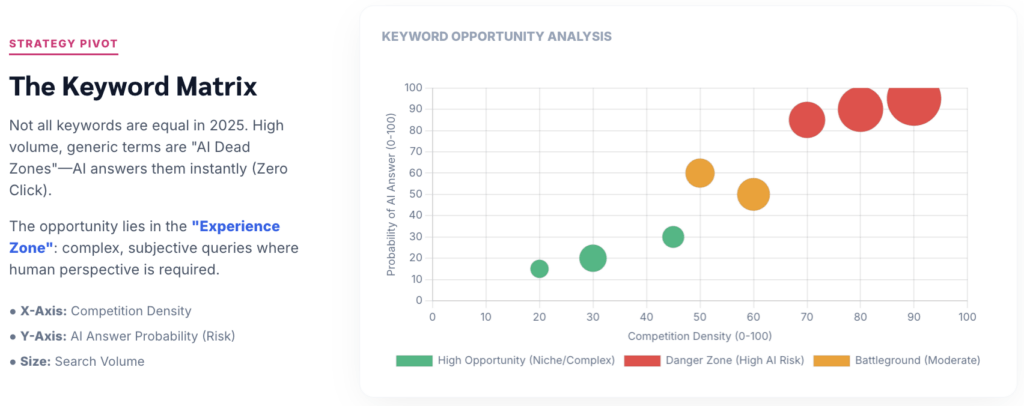
Google’s system uses generative AI to provide comprehensive, synthesized answers directly at the top of the SERP when it determines that such a summary would be “especially helpful”. In the Thai market, this feature has been aggressively rolled out for informational queries—complex questions regarding finance, health, travel planning, and education that historically drove significant traffic to local publishers, forums like Pantip, and niche blogs.
The visual dominance of the AI Overview on mobile devices is absolute. On a standard smartphone screen, the AI snapshot occupies the entire “above the fold” real estate, pushing traditional organic listings—and even some paid ad slots—significantly down the page. While Google asserts that these overviews feature prominent web links to facilitate further learning according to https://click-vision.com/zero-click-search-statistics , the behavioral reality is different. The “Zero-Click” phenomenon, where a search query is satisfied without a referral to an external website, has intensified dramatically. Global statistics indicate that by 2025, between 60% and 80% of searches end without a click based upon https://thedigitalbloom.com/learn/2025-organic-traffic-crisis-analysis-report/. In Thailand, given the extreme mobile dominance, this rate is likely at the upper end of the spectrum, as the friction of scrolling past a satisfactory AI answer is high.
2.2 The “Great Decoupling” and Publisher Economics
The “Great Decoupling” refers to the divergence between total search volume and website traffic. While Google processes billions of queries daily, fewer of those searches result in visits to external websites.9For Thai publishers, particularly news sites and informational portals, this has resulted in traffic declines ranging from 20% to 40% for top-of-funnel keywords. The implications are severe:
- Revenue Erosion: Publishers relying on display advertising (CPM models) face an existential threat as pageviews plummet. This is forcing a pivot toward subscription models, affiliate marketing, or direct commerce.
- The “Thainess” Content Defense: To survive, content strategies must shift from generic “What is” content (which AI can easily summarize) to deeply nuanced, culturally specific content that AI struggles to replicate. This involves “Thainess”—the integration of local humor, slang, specific cultural contexts, and verified human experience (E-E-A-T) that signals to both the user and the algorithm that the content offers value beyond the summary.
- Brand Visibility vs. Traffic: SEO KPIs in Thailand are shifting from “Organic Traffic” to “Share of Voice” or “Brand Visibility.” Being cited in an AI Overview is the new “Position Zero,” offering credibility even if it does not yield a direct click.
2.3 Paid Search Evolution: Performance Max and the Loss of Control
In the paid search domain, the transition to AI-driven automation is nearly complete. Performance Max (PMax) campaigns have become the standard for Thai advertisers, driven by the platform’s ability to optimize across Google’s entire inventory (Search, YouTube, Display, Maps) using real-time data signals.
- Adoption and Efficiency: PMax adoption is robust, with advertisers reporting an average ROAS (Return on Ad Spend) of 125% and conversion uplifts of 12-76% according to https://www.dataslayer.ai/blog/google-ads-performance-max-complete-guide-2025 However, this efficiency comes at the cost of control. The “black box” nature of PMax means advertisers can no longer manually bid on specific keywords with the same granularity as before.
- The Creative Differentiator: With targeting commoditized by AI, the primary lever for performance improvement is creative quality. In Thailand, this necessitates a continuous stream of high-quality video and visual assets, particularly for YouTube, which captures 58 minutes of daily attention from Thai users.
- Cost Dynamics: The saturation of PMax has led to increased competition and rising Cost Per Click (CPC) across 87% of industries based upon https://www.wordstream.com/blog/2025-google-ads-benchmarks To maintain profitability, Thai marketers are increasingly relying on first-party data integrations (Customer Match) to guide the AI toward high-lifetime-value users rather than just cheap conversions.
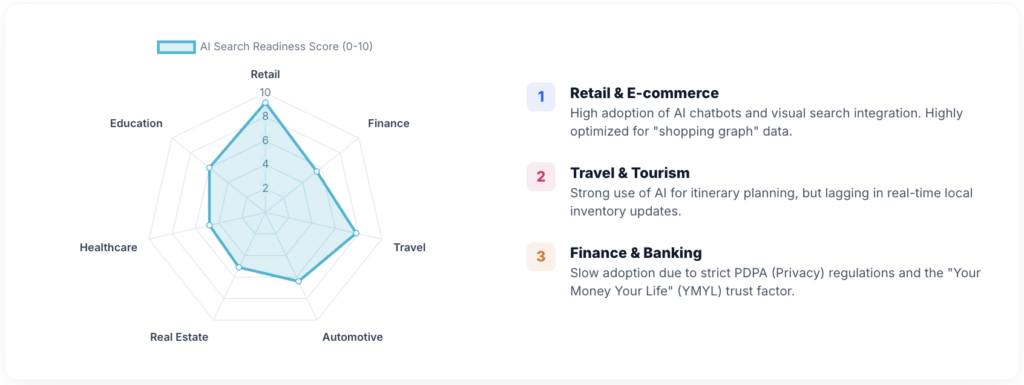
Table 1: The Impact of Zero-Click Search on Key Thai Industries (2025)
| Industry Sector | Primary Query Intent | Zero-Click Impact | Strategic Pivot Required |
| News & Media | Informational (e.g., “Election results”) | High: AI summarizes facts instantly. | Pivot to investigative journalism, opinion pieces, and video content. |
| E-commerce | Transactional (e.g., “Buy serum”) | Low/Medium: Users still need to transact. | Focus on product feed optimization and Marketplace (Shopee/Lazada) SEO. |
| Travel & Tourism | Exploration (e.g., “Pattaya itinerary”) | High: AI plans trips and lists spots. | Visual-heavy content; experiential reviews; direct booking incentives. |
| Finance/Banking | Advisory (e.g., “Best credit card”) | Medium: AI compares rates. | Deep personalization (FinFit); Trust/Authority signals (E-E-A-T). |
| Local Services | Navigational (e.g., “Plumber near me”) | Medium: Google Maps/AI Pack answers. | Google Business Profile optimization; Review management. |
3. Beyond the Browser: The Visual & Social Search Revolution
While Google retains the infrastructure of the open web, the behavior of search in Thailand has migrated significantly to social platforms, creating a bifurcated search economy. By 2025, TikTok has cemented its position not just as an entertainment platform, but as a primary search engine, particularly for Gen Z and Millennials, challenging Google’s hegemony in discovery-oriented queries.
3.1 TikTok as a Search Engine: The “Reviews First” Culture
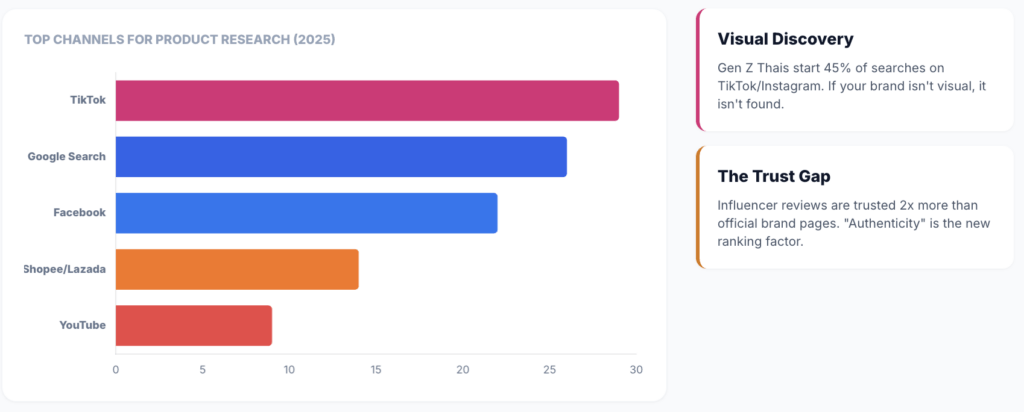
Thais rank TikTok as their most loved platform (30.3%), surpassing Facebook (29.2%). Critically, the platform is used extensively for product research, driven by a “reviews first, shopping later” culture where 35.6% of Thais always read reviews before purchasing according to https://www.nationthailand.com/news/general/40058632. The “Search” function on TikTok is fundamentally different from Google’s:
- Visual Validation: A user looking for “best foundation for oily skin” in Thailand is more likely to search on TikTok to see a wear-test video than to read a text-based blog post. This visual evidence builds trust in a way that text cannot.
- Algorithmic Serendipity: TikTok’s search algorithm prioritizes engagement and relevance over domain authority. This democratizes search visibility, allowing smaller Thai brands to rank for high-volume keywords if their content is engaging and optimized.
- The Rise of TikTok SEO: This has given rise to a specific discipline of TikTok SEO. Unlike Google’s technical SEO, TikTok SEO focuses on optimizing “in-video” elements. The algorithm uses Optical Character Recognition (OCR) to read on-screen text, Automatic Speech Recognition (ASR) to transcribe voiceovers, and computer vision to identify objects in the video according to https://cedcommerce.com/blog/seo-and-discoverability-on-tiktok-shop-advanced-techniques/.Thai marketers must now ensure that their target keywords are spoken, written on screen, and included in captions to achieve visibility.
3.2 Cross-Platform Validation and “Platform-Switching”
The user journey in 2025 is defined by “Platform-Switching.” A Thai user might start a search on TikTok for inspiration (Discovery), move to Google to check price comparisons or official specs (Validation), and finally go to Shopee or Lazada to purchase (Transaction) based upon https://www.meltwater.com/en/blog/social-media-statistics-thailand
- The Validation Loop: 98.5% of Thai internet users are active on chat/messaging apps and social networks. Marketers must treat “search” as an omnichannel discipline. Being visible on Google is insufficient if the brand lacks a “validator” presence on social media. If a user finds a brand on Google but cannot find a verified, active Instagram or TikTok profile, trust diminishes significantly.
- Video Dominance in SERPs: Recognizing this shift, Google has integrated more video content into its own SERPs. Video snippets from YouTube and TikTok now frequently appear in Google search results for “how-to” and review-based queries according to https://minimicegroup.co.th/2025-thailand-seo-market-report/ , making video content a dual-threat asset capable of capturing traffic from both social and traditional search engines.
3.3 The Role of Influencers in Search
Influencer marketing has merged with search marketing. “Micro-influencers” are increasingly vital as trusted sources of information. Their content, when optimized with the right hashtags and keywords, populates the search results on social platforms. Agencies like Grey Alchemy and Minimice Group specialize in connecting brands with influencers who can dominate specific search niches, effectively “renting” the search visibility of these creators.
4. The Walled Gardens: Marketplace Search & AI in E-commerce
Thailand’s e-commerce market is dominated by a duopoly of Shopee and Lazada, with TikTok Shop rising as a formidable third player. These platforms have developed their own sophisticated search algorithms, effectively becoming the default “product search engines” for Thai consumers. Data indicates that a user looking to buy running shoes is statistically more likely to start their search on Shopee than on Google.2
4.1 Shopee and Lazada: The AI Arms Race
Both Shopee and Lazada have integrated Generative AI deep into their ecosystems to enhance both the seller and buyer experience, creating a closed-loop search environment where users can discover, research, and buy without ever leaving the app.
- Lazada’s GenAI Tools: Lazada has rolled out a suite of AI tools designed to optimize the seller experience. “AI Smart Product Optimization” enhances listings with better titles and images, while “AI-Powered Translations” helps cross-border sellers localize content for the Thai market based upon https://www.bangkokpost.com/business/general/3005127/lazada-unlocks-ai-driven-growth-to-help-thai-sellers-bridge-readiness-gap-. Additionally, the “Lazzie” chatbot and “LISA” (Lazada Instant Messaging Shop Assistant) use AI to answer buyer queries instantly, improving conversion rates.
- Shopee’s Content Commerce: Shopee is investing heavily in “content commerce,” utilizing AI to generate content for sellers. This includes AI models that can virtually “wear” clothing items for product photos and AI-driven live streaming capabilities that allow for 24/7 broadcasting without human hosts according to https://www.bangkokpost.com/business/general/3136220/shopee-harnesses-ai-to-fuel-digital-growth-in-thailand. This move addresses the labor shortage in the live-selling sector and ensures that brands remain visible in search results at all hours.
4.2 Marketplace Optimization (MPO) Strategies
For search marketers in 2025, Marketplace Optimization (MPO) requires a distinct set of tactics compared to web SEO:
- Sales Velocity: Unlike Google, where backlinks are a primary ranking factor, marketplace algorithms heavily weight “sales velocity” (the rate at which a product sells) and recent reviews.
- Visual Search Optimization: With users increasingly using image search features to find products, optimizing main product images for visual recognition algorithms is critical.
- Chat Response Rates: The “Chat Response Rate” is a visible metric that influences search ranking. Utilizing AI chatbots to maintain a 100% response rate is now a prerequisite for visibility according to https://abovea.tech/ecommerce-startups-thailand-competing-lazada-shopee/.
4.3 The Rise of Live Commerce Search
Live commerce has evolved from a novelty to a primary sales channel. Shopee reports a 65% order growth from live sellers. Users now actively “search” for live streams related to specific categories (e.g., “live selling gold” or “live seafood”). Brands must optimize their stream titles, tags, and broadcast times to capture this high-intent traffic.
5. The Super App Strategy: LINE’s Agentic AI Evolution
LINE, used by 85.7% of Thai internet users (approximately 56 million people) based upon https://www.meltwater.com/en/blog/social-media-statistics-thailand, acts as the operating system of daily life in Thailand. In 2025, LINE has pivoted aggressively toward “Agentic AI,” aiming to redefine how users interact with digital services and moving beyond the traditional “Official Account” (OA) model.
5.1 Agentic AI and the “App-in-App” Ecosystem
Under the leadership of Line Thailand, the platform has launched “Agentic AI” assistants—intelligent, customizable virtual agents often styled as anime characters to resonate with local culture according to https://www.bangkokpost.com/business/general/3147644/line-pivots-to-new-role-in-digital-economy. These agents differ from traditional chatbots in their autonomy; they are capable of planning, acting, and executing complex workflows.
- Functional Autonomy: These agents can act as personal concierges, capable of booking tables, ordering food via LINE MAN, sending maps, and managing payments without the user leaving the chat interface.
- The Mini App Revolution: The agentic strategy relies on “Mini Apps” that run within LINE. For Thai SMEs, building a LINE Mini App is often more valuable than developing a standalone native app. It leverages LINE’s massive user base, integrated login, and payment systems. This “App-in-App” model reduces the friction of user acquisition and app installation.
- Model Context Protocol (MCP): LINE has adopted the MCP standard, which acts as a universal connector for AI agents according to https://www.linepluscorp.com/en/pr/news/global/20251028/. This protocol allows LINE’s agents to connect seamlessly with external databases and tools. For example, a user could ask their agent to “Check stock for iPhone 16 at the Siam Paragon store,” and the agent would autonomously query the store’s inventory system via MCP and return the answer.
5.2 Implications for “Conversational Search”
This shift transforms LINE into a “Conversational Search Engine.” Users do not “search” for a restaurant in a directory; they “ask” their LINE agent for a recommendation.
- Invisible SEO: Marketing on LINE becomes about being the recommendation engine’s preferred choice. This requires deep integration with LINE’s ecosystem, ensuring that a brand’s Mini App or OA is optimized for the agent’s retrieval protocols.
- Data Sovereignty: A key differentiator for LINE is its stance on data. Unlike the “black box” models of Facebook or Google, LINE positions itself as a platform that empowers SMEs to own their customer data. This makes LINE a critical channel for First-Party Data strategies, which are essential in the privacy-focused era of 2025.
6. Technological Sovereignty: The Challenge of Thai NLP & LLMs
A critical challenge and opportunity in 2025 is the development of Thai-specific Large Language Models (LLMs). While global models like GPT-4 are powerful, they often lack the cultural nuance, tonal sensitivity, and deep linguistic understanding required for high-context Thai communication.
6.1 The “Typhoon” Project: Ambition vs. Reality
SCB 10X, the tech investment arm of Siam Commercial Bank, spearheaded the development of “Typhoon,” a series of Thai LLMs designed to outperform global models in Thai language tasks according to https://arxiv.org/html/2312.13951v1
- Technical Achievement: Typhoon 2.1, based on Google’s Gemma architecture, demonstrated superior performance in Thai linguistics and cost-efficiency compared to larger global models. It was positioned as a national asset, capable of handling unique Thai NLP challenges such as the lack of spaces between words and complex tonal rules.
- Strategic Reassessment: Despite technical successes, late 2025 saw a strategic withdrawal of support for the massive Typhoon project by SCB 10X due to market viability concerns and the immense capital required to compete with global giants. This development highlights the tension between “National AI sovereignty” and the economic reality of the global AI arms race.
- Ecosystem Impact: Even with the scaling back of the foundational model, the application layer remains vital. Specialized models like “Typhoon Isan” (for regional dialects) and integrations for government and education continue to demonstrate the market’s need for localized AI.
6.2 Thai NLP Challenges in Search
Marketing in Thailand requires AI that understands the specific linguistic idiosyncrasies of the market:
- Code-Switching: Thai users seamlessly blend Thai, English, and “Karaoke” (Thai written in English script) in search queries. Search algorithms must be trained to recognize that “rod” (car) and “rot” might mean the same thing depending on context.
- High-Context Particles: The use of polite particles (Khrup/Ka) changes the sentiment and intent of a query. AI tools must be sensitive to these nuances to deliver appropriate results based upon https://datalab.flitto.com/en/company/blog/thai-corpus-for-ai-systems-challenges-and-opportunities/.
- Tonal Nuance: Thai is a tonal language. A slight difference in tone mark can change a word from “Near” (Klai) to “Far” (Klai). Global models frequently misinterpret these, leading to irrelevant search results.For marketers, this means that simple translation of English keywords or content is insufficient. Content must be natively generated or deeply refined by Thai-aware AI tools to rank and resonate.
7. The Agency Response: From Execution to AI Strategy
The role of the digital marketing agency in Thailand has undergone a forced evolution. The “content factory” model of churning out generic posts is obsolete in an era of GenAI. The agencies that thrive in 2025 are those that have pivoted to high-level strategy, data integration, and “Adaptive Performance.”
7.1 The Shift to “Adaptive Performance”
Leading agencies have moved away from vanity metrics (likes/views) to strict ROI-focused models.
- Minimice Group: Positions itself as an “ROI-Centric Problem Solver” utilizing “Adaptive Performance.” They integrate high-level SEO with aggressive, conversion-focused paid media, pivoting strategies based on real-time data rather than static plans according to https://minimicegroup.co.th/the-10-best-digital-marketing-agencies-in-thailand-2026/.
- Pacy Media: Replaces traditional models with a strong focus on measurable outcomes and data transparency. As a Google Partner, they utilize data analytics to optimize campaigns paired with AI, focusing on full-funnel SEO and “White Hat” strategies to ensure long-term, measurable growth for clients.
- Yes Web Design Studio: Represents the new wave of creative-tech hybrids. They explicitly offer “AI Solutions” including chatbots, AI agents, and content automation, positioning themselves as a partner for digital transformation rather than just execution.
7.2 Award-Winning AI Case Studies
Recent industry awards highlight the successful application of AI in Thai marketing campaigns 36:
- Krungthai Bank (Digitas Thailand): Won Gold for “Krungthai FinFit,” a mass-personalized financial fitness campaign. This campaign utilized data analytics and AI to provide individualized financial advice to millions of users, demonstrating the power of personalization at scale.
- Glucerna (Spark Foundry/Leo Burnett): Won Silver for “AI-Driven Outreach to Detect and Support Undiscovered Diabetes Needs.” This campaign used AI to identify potential diabetes patients based on search and behavioral patterns, delivering targeted educational content to support early detection.
- Garnier (Wavemaker/Aircards): Won Gold for “Garnier Micellar Pride: AI-Personalised DOOH.” This campaign integrated AI with Digital Out-of-Home (DOOH) advertising to create personalized messages, bridging the gap between online data and offline experiences.
Table 2: Top Thai Digital Agencies and Their Strategic AI Focus (2025)
| Agency | Core Philosophy | Specific AI/Search Capability | Ideal Client Profile |
| Minimice Group | Adaptive Performance | ROI-centric SEO & Paid Media integration; volatility management. | Revenue-focused SMEs & Enterprises. |
| Cotactic | Tactical Growth | Hybrid SEO & Ads (Lead Combo); Execution-focused strategies. | SMEs & Challenger Brands needing fast results. |
| Pacy Media | Measurable Results | AI-paired campaign optimization; Full-funnel data analytics. | Businesses requiring transparent, data-backed ROI. |
| Yes Web Design Studio | Creative Innovation | AI Agents, Chatbots & Content Automation; Web-integrated SEO.35 | Brands seeking digital transformation & emerging tech. |
| Magnetolabs | Inbound Marketing | HubSpot integration; Trust-based content strategy (MarTech focus). | B2B companies & High-consideration services. |
8. Strategic Outlook: Navigating the Future of Thai Search
As we look toward 2026 and beyond, the search marketing landscape in Thailand is defined by the convergence of AI, commerce, and conversation. The “Zero-Click” reality is not a temporary trend but a structural shift that demands a fundamental rethinking of digital strategy.
8.1 The “Thainess” Content Strategy as a Moat
In a sea of AI-generated content, “Thainess” becomes the ultimate differentiator. Global AI models often produce generic, culturally flat content. Brands must invest in human creators who can inject the specific cultural flavors—humor, empathy, local slang, and visual aesthetics—that AI cannot mimic. This “Thainess” serves as a signal of authenticity (E-E-A-T) that both Google’s algorithms and Thai consumers reward.2
8.2 Own the Transaction, Not Just the Traffic
With traffic declining due to Zero-Click searches, the value of each visitor increases exponentially. Brands must shift their focus from maximizing traffic volume to maximizing conversion rate (CRO) and lifetime value (LTV).
- Direct-to-Consumer (DTC) Resilience: Brands must build direct relationships via LINE, email, and owned apps to inoculate themselves against platform algorithm changes.
- Marketplace Dominance: Treat Shopee, Lazada, and TikTok Shop as primary search engines. Optimizing for their closed-loop algorithms is as important as traditional SEO.
8.3 Embrace “Agentic” Marketing
The future of interaction is agent-to-agent. Your brand’s digital presence must be structured to be readable not just by humans, but by AI agents. This means robust implementation of Schema markup, API accessibility for inventory and pricing, and ensuring that your “digital twin” (data representation) is accurate across all platforms.
8.4 Conclusion: The Centaur Approach
The state of AI in Thai search marketing in 2025 is not one of human replacement, but of augmentation. The most successful entities—brands, agencies, and platforms—will be “Centaurs”: hybrids of human creativity and AI efficiency. The “human” element provides the trust, the culture, and the brand soul. The “AI” element provides the scale, the personalization, and the speed. For the marketer in Thailand, the mandate is clear: Accept the Zero-Click reality, diversify search visibility across the “walled gardens” of social and commerce, and use AI to deliver “small joys” with precision and empathy.